About QRS


This year is the 26th anniversary of the QRS Conference. The first edition of the conference was held in Hong Kong, China in 2000 under the name of Asia-Pacific Conference on Quality Software. Since then, the conference has grown significantly. In 2015, the SERE conference (International Conference on Software Security and Reliability) and the QSIC conference (International Conference on Quality Software) were combined into a single conference, QRS, with Q representing Quality, R for Reliability, and S for Security. This conference gives engineers and scientists from both industry and academia a platform to present their ongoing work, relate their research outcomes and experiences, and discuss the best and most efficient techniques for the development of reliable, secure, and trustworthy systems. It also represents an excellent opportunity for the academic community to become more aware of subject areas critical to the software industry as practitioners bring their needs to the table. The 26th QRS conference will be held from July 22-25, 2026 at the University of Florence, Italy.

News & Announcements


  • Instructions for video presentations [English] [Chinese]
  • China Computer Federation (CCF) has become a collaborative partner (合作伙伴) of QRS 2026
  • CCF members have the same registration discount as IEEE members
  • QRS 2026 has received Technical Sponsorship from IEEE Reliability Society Japan Joint Chapter
  • QRS 2026 has received Technical Sponsorship from
    • International Federation for Information Processing Working Group on Dependable Computing and Fault Tolerance (IFIP WG 10.4)
    • European Workshop on Industrial Computer Systems – Reliability, Safety and Security (EWICS)
    • Reliability Engineering Association of Japan (REAJ)
  • Submissions to the main conference opened
  • CSEE&T 2026 (The 38th International Conference on Software Engineering Education and Training) will be co-located at the same venue from July 20-22.
    Website: https://cseet26.techconf.org
  • Statistics of recent QRS
    • Number of submissions
      303 for 2021 (243 regular papers and 60 short papers)
      303 for 2022 (273 regular papers and 30 short papers)
      272 for 2023 (230 regular papers and 42 short papers)
      210 for 2024 (189 regular papers and 21 short papers)
      269 for 2025
      278 for 2026
    • Acceptance rate of regular papers
      25.10% for 2021 (61/243)
      27.47% for 2022 (75/273)
      23.47% for 2023 (54/230)
      26.45% for 2024 (50/189)
      24.16% for 2025 (65/269)
      25.54% for 2026 (71/278)
    The denominators do not include the number of submissions of the short papers.
  • Conference website launched

  • Keynote Speakers & Plenary Panels


    Keynote 1: The Computing Continuum Needs a Trust Continuum
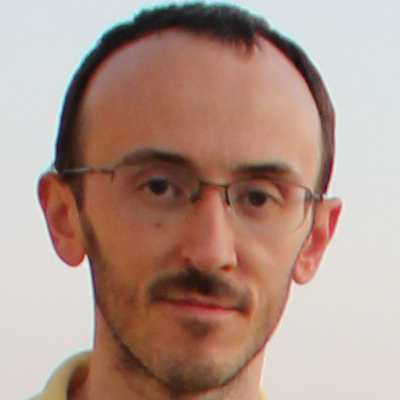
    Professor Bruno Crispo Web

    Department of Computer Science and Information Engineering

    University of Trento, Italy

    Keynote 2: From Human Intelligence to Machine Intelligence: A Brain-Inspired Agentic Computation Architecture
    Professor Yang Liu Web

    Executive Director of Cyber Security Research Center and CyberSG R&D Programme Office

    Nanyang Technological University, Singapore

    Keynote 3: Measuring and Visualizing Dataset Coverage for Autonomy, AI, and Machine Learning
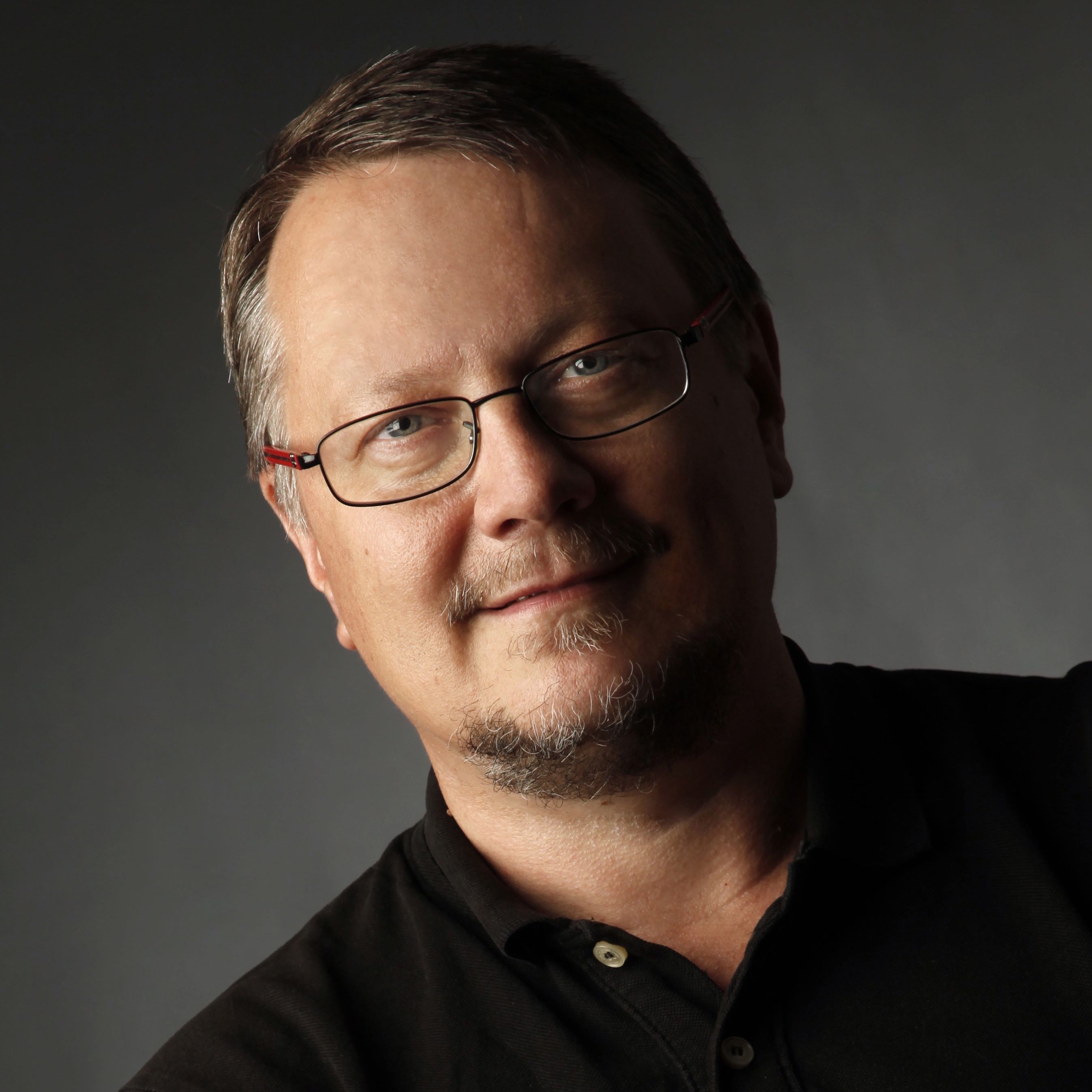
    Professor Richard Kuhn Web

    IEEE Fellow

    Virginia Tech / Former National Institute of Standards and Technology, USA

    Plenary Panel I: Open Source: A QRS Blessing or Curse?
    Moderator

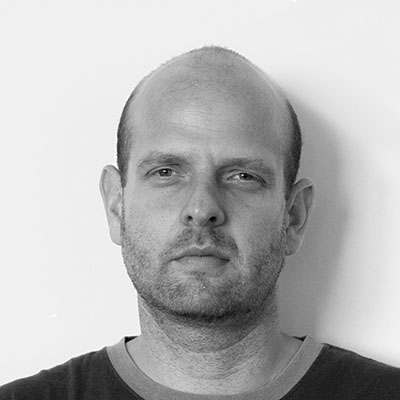
    Professor András Pataricza Web

    Department of Measurement and Information Systems

    Budapest University of Technology and Economics, Hungary
    Panelists (Alphabetical Order)(Tentative)

    Professor Gergely Biczok Web

    CrySyS Lab

    Budapest University of Technology and Economics, Hungary

    Professor Juan Boubeta-Puig Web

    Department of Computer Science and Engineering

    University of Cádiz, Spain
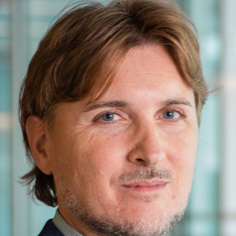
    Dr. Francesco Flammini Web

    Professor and Group Leader
    Trustworthy Autonomous Systems

    University of Applied Sciences and Arts of Southern, Switzerland

    Dr. Fabio Martinelli Web

    Research Director

    National Research Council (CNR), Italy

    Professor Elena Troubitsyna Web

    Head of the Department of Theoretical Computer Science
    Director of ICT Innovation Master Program

    KTH Royal Institute of Technology, Sweden

    Plenary Panel II: Dependable Software Engineering in the Era of AI
    Moderator

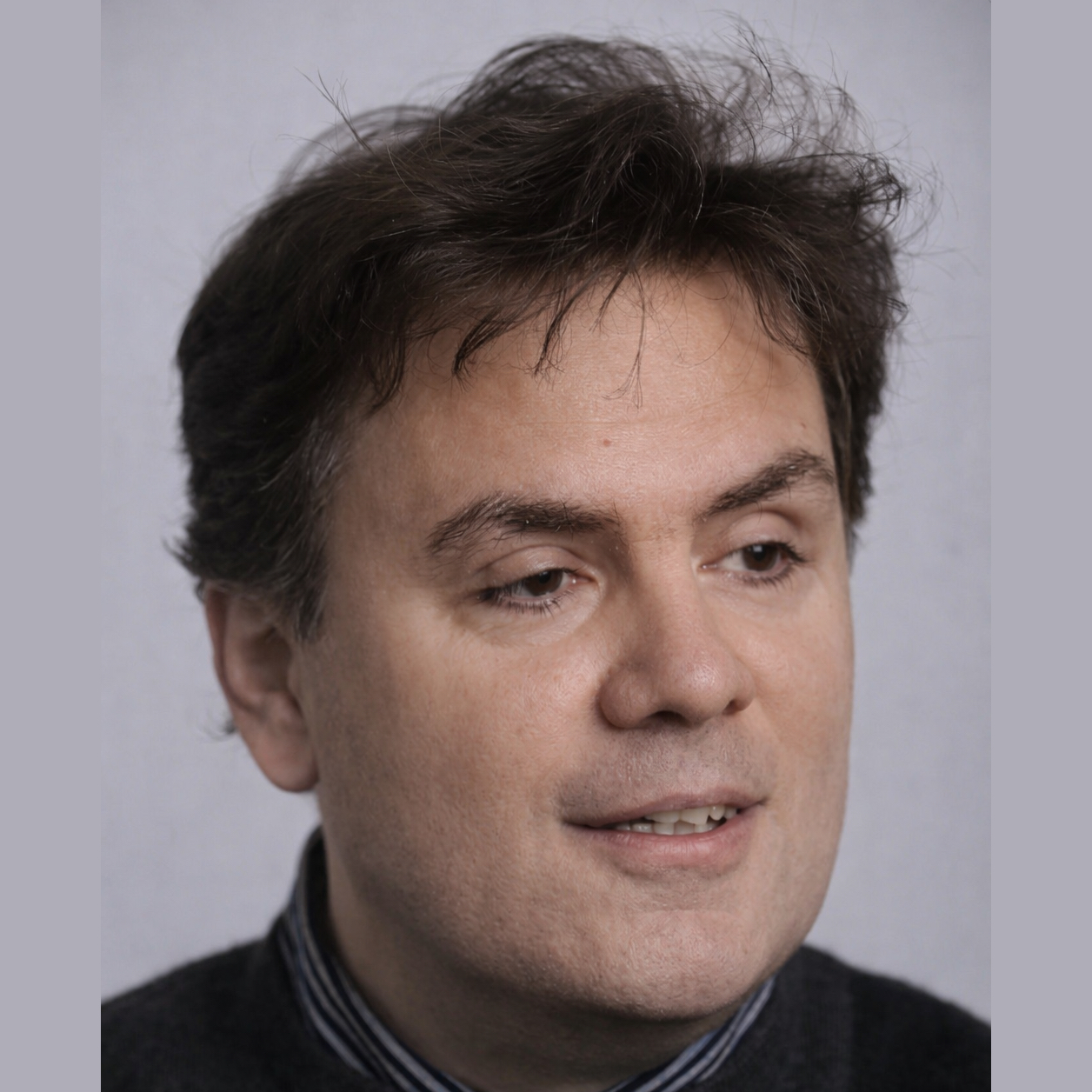
    Professor Enrico Vicario Web

    Head of the Lab of Software Technologies

    University of Florence, Italy

    Panelists (Alphabetical Order)(Tentative)

    Professor Marco Lippi Web

    Department of Information Engineering

    University of Florence, Italy

    Professor Shaoying Liu Web

    IEEE Fellow, BCS Fellow, AAIA Fellow
    School of Software Engineering

    East China Normal University, China

    Professor Roberto Natella Web

    DSN Rising Star in Dependability Award
    Department of Computer Science

    Gran Sasso Science Institute (GSSI), Italy

    Professor Franz Wotawa Web

    Head of Institute of Software Engineering and Artificial Intelligence

    Graz University of Technology, Austria
    Topics of Interest


    • Reliability, Security, Availability, and Safety of Software Systems
    • AI-based Techniques for Software Quality, Reliability, and Security
    • Machine Learning and Deep Learning Models and Systems
    • Natural Language Processing and Large Language Models
    • Knowledge-based Techniques for Software Quality, Reliability, and Security
    • Software Testing, Verification, and Validation
    • Program Debugging and Comprehension
    • Information and Software Quality Assurance
    • Fault Tolerance for Software Reliability Improvement
    • Modeling, Prediction, Simulation, and Evaluation
    • Metrics, Measurements, and Analysis
    • Software Penetration and Protection
    • Software Vulnerabilities
    • Formal Methods
    • Malware Detection and Analysis
    • Intrusion Detection and Prevention
    • Operating System Security and Reliability
    • IoT, Fuzzy Systems, Cyber-Physical Systems, and Industry 4.0
    • Mobile and Smartphone Applications
    • Cloud Computing and Smart City
    • Information and Knowledge Management
    • Secure and Reliable Storage
    • Benchmark, Tools, Industrial Applications, and Empirical Studies

    Collaborative Partner

    University of Florence

    Organizer

    University of Florence

    Conference Patrons

    IFIP
    EWICS
    REAJ
    IEEE Reliability Society Japan Joint Chapter
    University of Leicester
    Mooctest